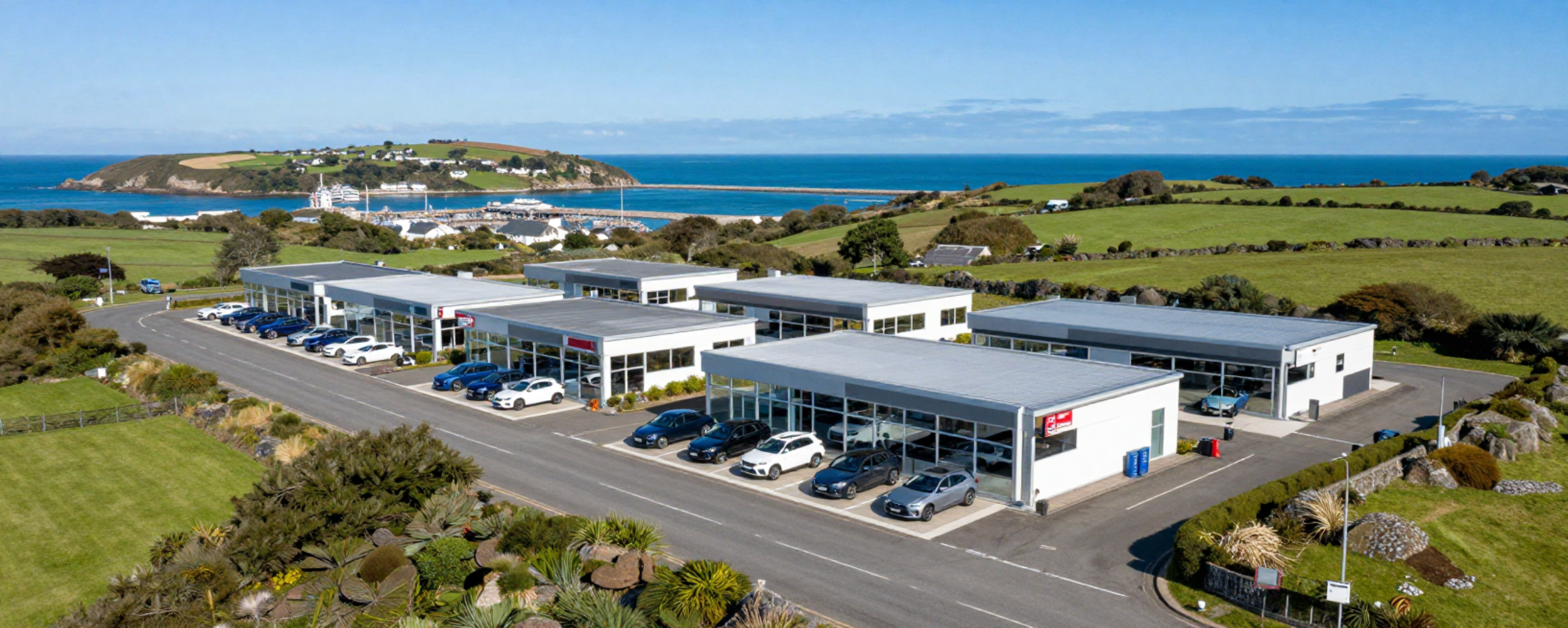
Channel Islands Automotive Retail: A Market in Transition
Jersey and Guernsey’s automotive retail sector faces a unique set of pressures, from import duty structures to the accelerating shift to agency models. We assess the leadership implications.
A Distinctive Market With Distinctive Challenges
The Channel Islands automotive retail market is frequently misunderstood by mainland UK operators who assume that proximity implies similarity. In practice, Jersey and Guernsey present a set of structural characteristics that make them genuinely distinct markets — and that require leadership with specific regional knowledge to navigate effectively.
The most significant structural difference is the import duty regime. Both islands operate outside the UK VAT system and apply their own import duty structures to new vehicles, creating pricing dynamics that diverge materially from the mainland. For operators managing cross-channel inventory and pricing strategy, this requires financial and commercial leadership that understands the regulatory environment in detail.
The Agency Model Arrives
The lifestyle offer is genuine and compelling for the right candidate. The challenge is constructing a proposition that is competitive across all dimensions, not simply assuming the lifestyle will do the work.
The shift to agency distribution — in which manufacturers set retail prices and dealers act as agents earning a fixed fee per transaction rather than trading on margin — is creating particular complexity in the Channel Islands. The island markets have historically operated with greater pricing flexibility than the mainland, and the transition to fixed-price agency models is compressing margins in ways that require careful management.
The leadership implication is direct. Dealer principals and General Managers who built their careers on the traditional margin-trading model need to develop new commercial competencies, or be replaced by leaders who already possess them. We are seeing a meaningful increase in mandates from Channel Islands operators seeking executives with agency model experience from mainland UK or European markets.
Talent Dynamics: The Island Premium
Attracting senior talent to the Channel Islands has always required a premium, not purely financial, but in terms of the overall proposition. The lifestyle offer is genuine and compelling for the right candidate: lower personal tax rates, a high quality of life, and the appeal of a smaller, more manageable market where senior executives have genuine autonomy and visibility.
The challenge is that the pool of candidates willing to relocate to the islands is inherently smaller than the mainland pool, and the organisations competing for that talent include financial services, professional services, and hospitality businesses that can offer comparable packages. Automotive operators need to construct propositions that are genuinely competitive across all dimensions — not simply assume that the lifestyle offer will do the work.
Our Outlook
The Channel Islands automotive market will consolidate over the next three to five years. The combination of agency model margin compression, EV transition costs, and the limited scale of island markets will make standalone single-site operations increasingly difficult to sustain. The operators who will emerge strongest are those investing now in the leadership capability to manage this transition, and in the relationships with talent that will give them access to the best candidates when they need them.